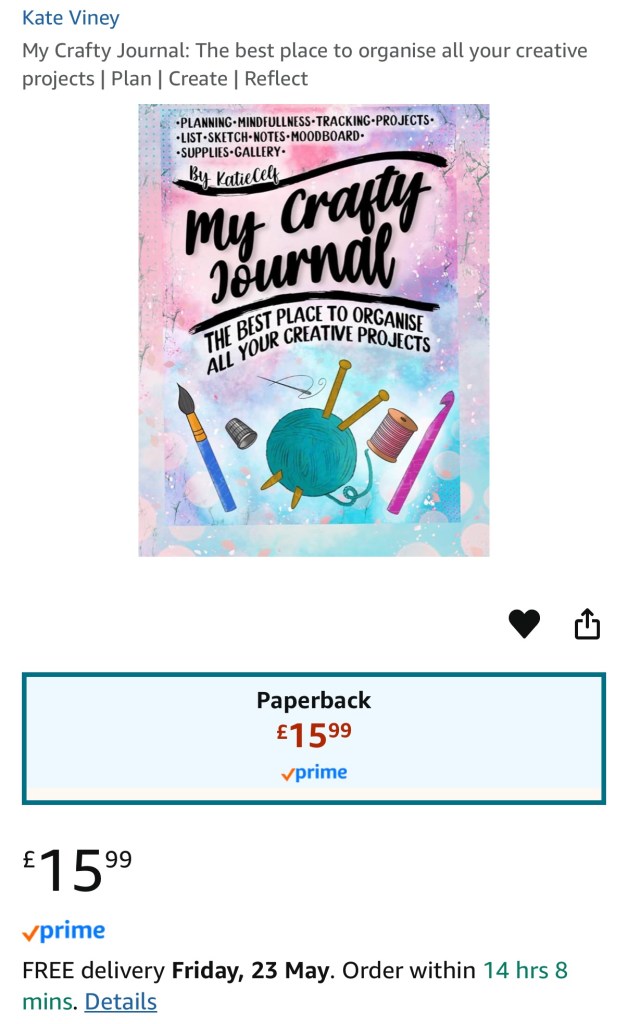
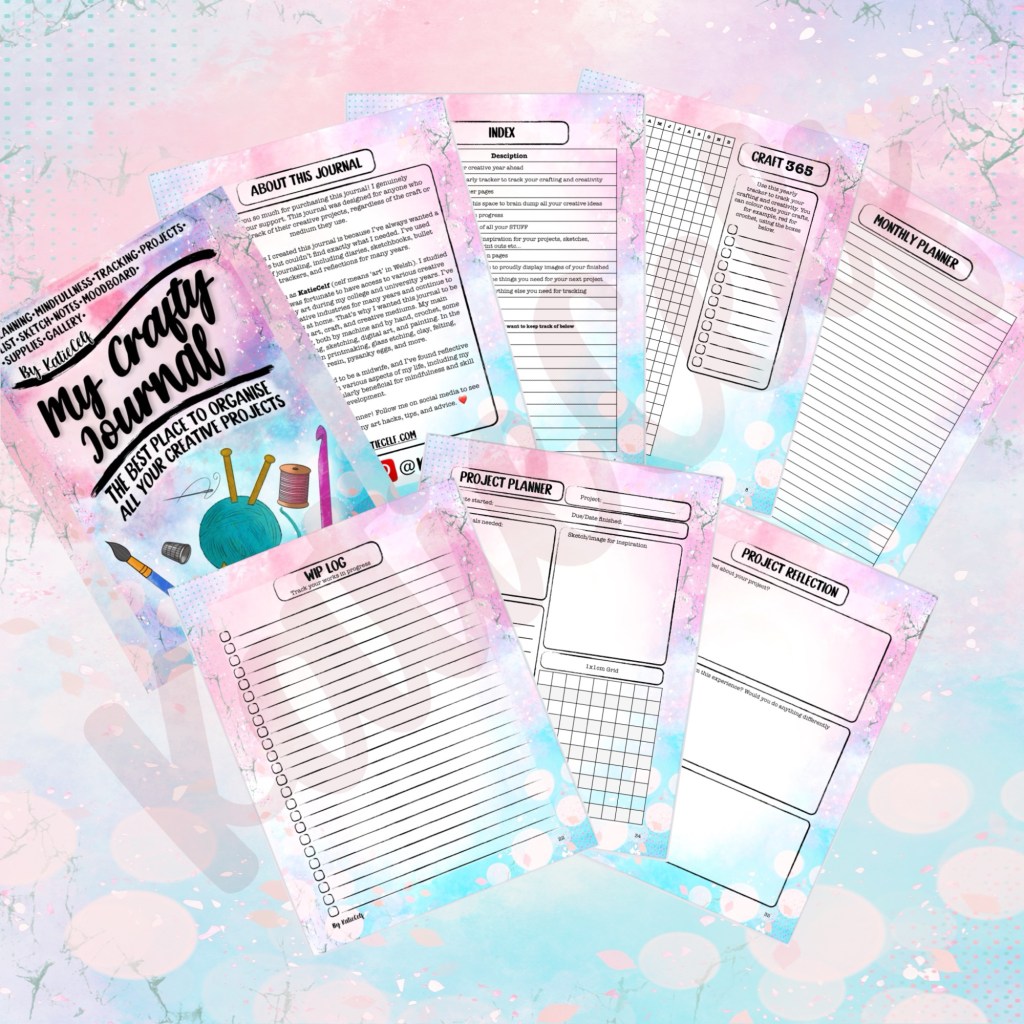
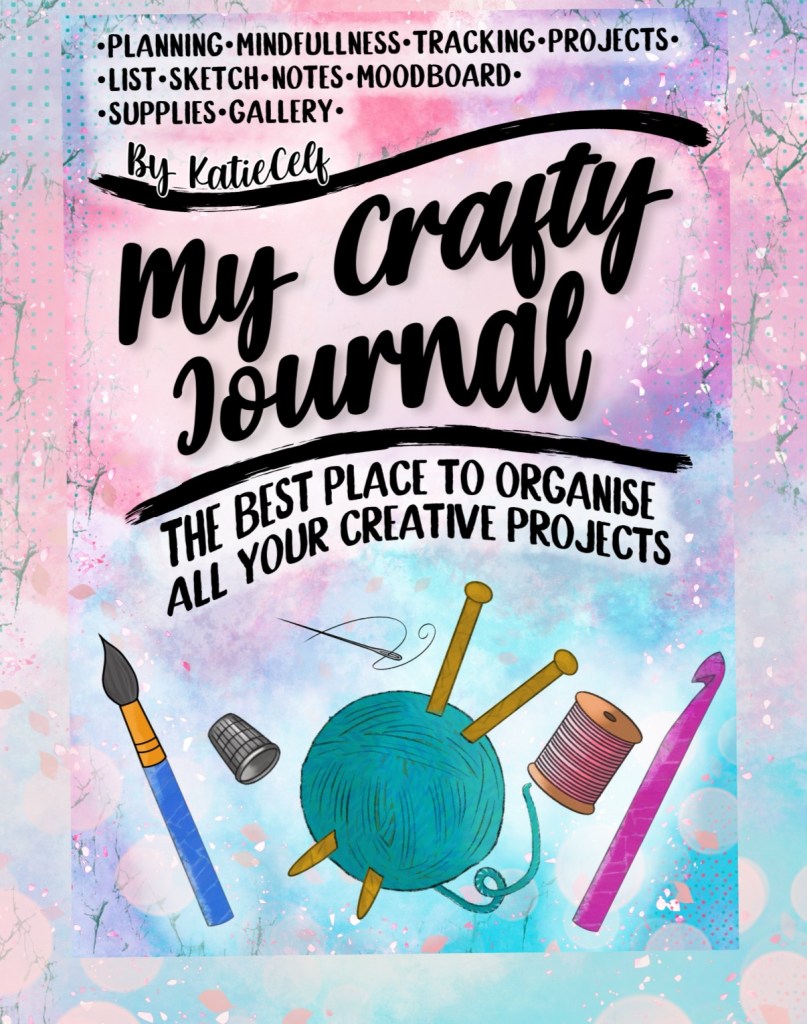
A versatile creative journal designed to support artists and crafters in organising, tracking, and reflecting on their projects across multiple mediums.
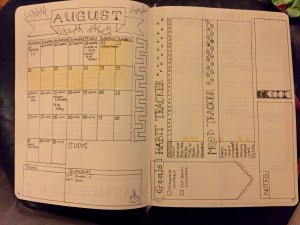
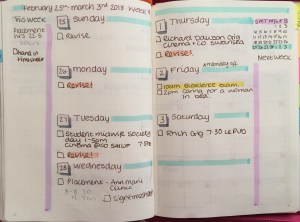
I’ve been using bullet journaling to organise my brain since around 2016, so nearly 10years now! But I’ve always loved having some sort of physical diary, planner or tracker so I can keep tabs on everything going on.
There’s something about the physical act of hand writing an event or appointment in a journal or diary that cements it into my brain and prevents it getting lost in all the other mental coming and going’s.
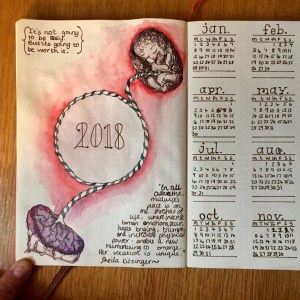
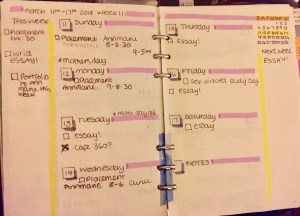
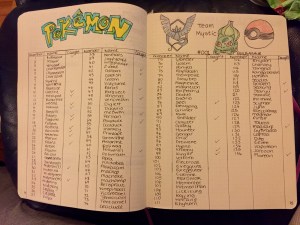
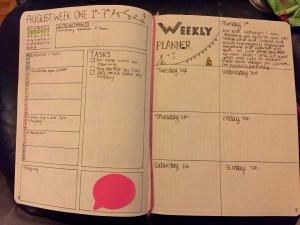
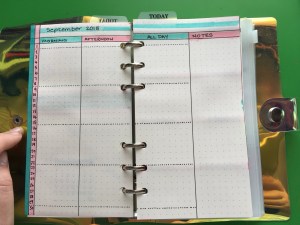
Examples of some of the ways I’ve used bullet journaling in the past and how I’ve evolved it to be more functional and easier to set up over the years
I’ve tried to use digital planners a few times and even made my own but I don’t get the same sense of “setting it“ into my brain.
This year I’ve been able to prioritise making again. Partly due to ill health meaning I’ve had to take some time off work, but also because I’ve been using it as a form of therapy and recovery.
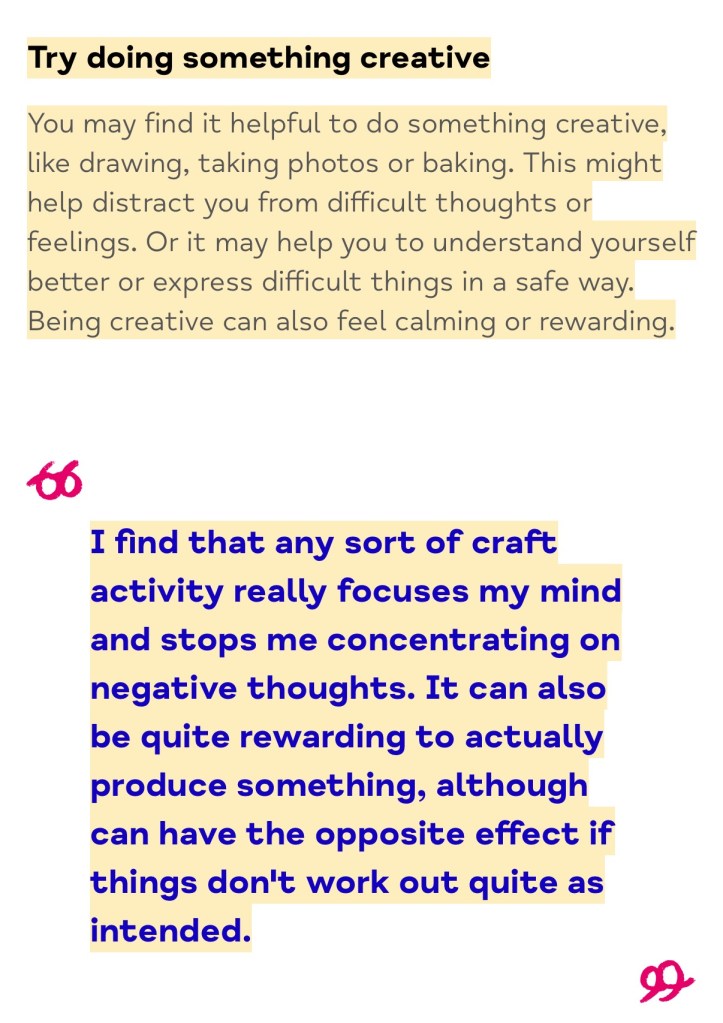
Making things is a proven way to improve your mental health.
With all my new crafting, has come many ideas for new makes. So much so that my tiny little brain can’t keep track of them all. I started looking for ideas on tracking creative projects. Everything I saw online didn’t really cover what I wanted though.
So, I decided to make my own. Originally I thought maybe I could make a printable version and put it on Etsy etc but then I learnt about kindle direct publishing…
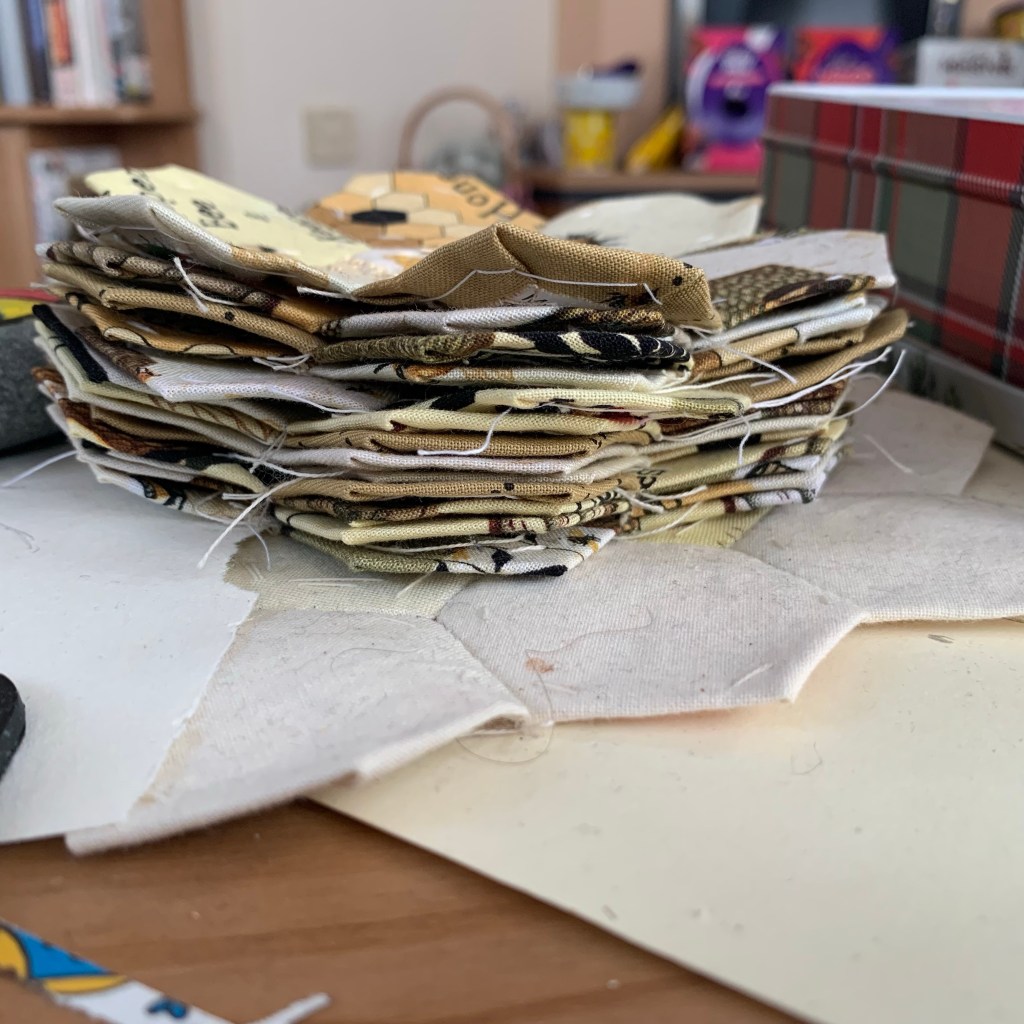
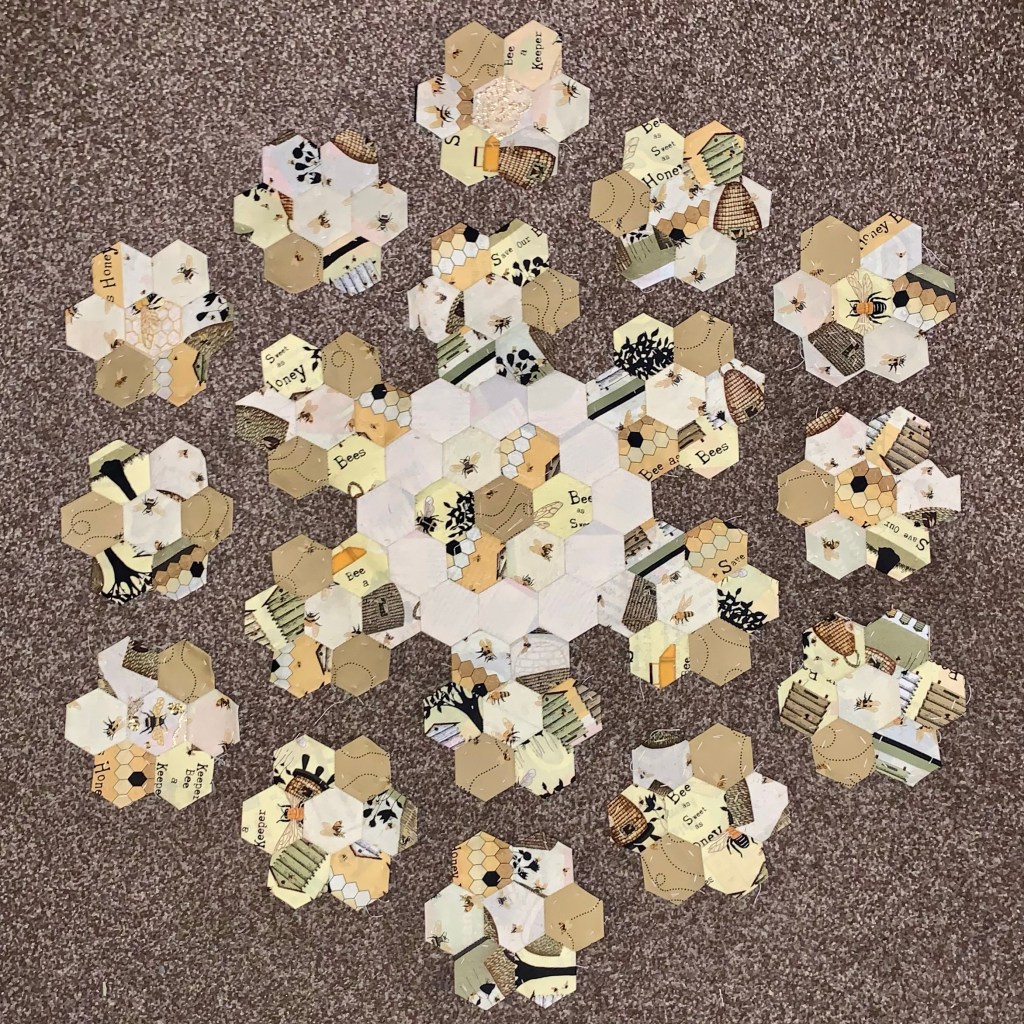
Seeing all my hexis that I’ve cut out together laid out rather than in a box is pretty intimidating. I’m not sure how many I have, I don’t think I want to know 😱 Just got to embrace the process and accept, this isn’t a quick project.
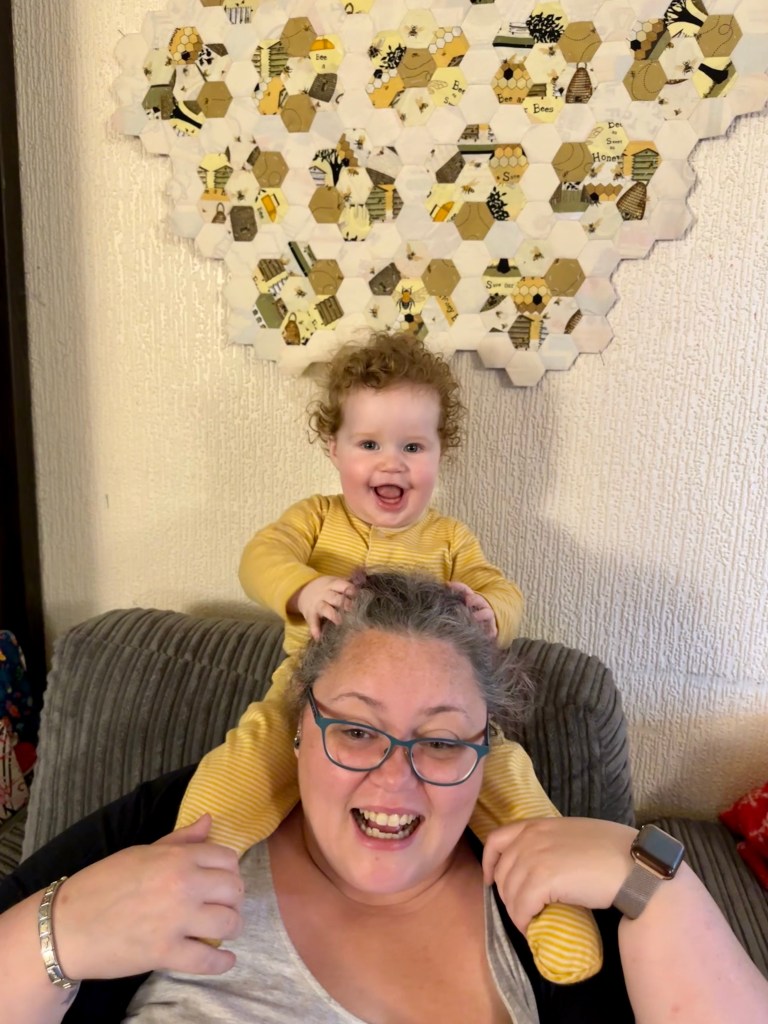
I’ve been slowly making this since 2020 lockdown, see previous blog for more information. What I’ve completed so far is hanging on my living room wall.
Ignore my stupid face and hair 🫣
I decided to make one of each hexi, as I’d bought some new fabric and hope it’ll go nicely with what I have already.
I was trying to decide how best to approach getting all these backed onto paper with losing the will to live. What I have been doing is making up a few in all the different fabrics and then making a few hexi flowers and starting again, before seeing all the hexi flower together.
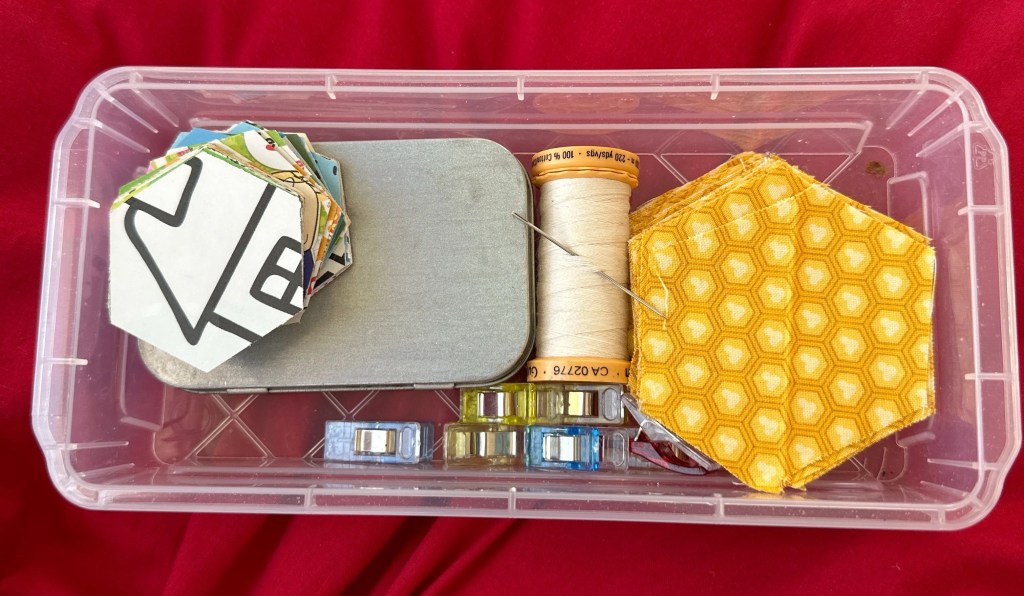
This time I’ve decided to just keep a stash of one of the types of ready cut hexis in a box with everything I need to back them. So now I can just whip that out and make a couple as and when I feel like it.
EPP Kit
Seems less intimidating to do it this way, rather than getting the whole lot out each time.
So I’ve got 12 different fabrics now, I like how they all look together 😍 These are the samples I made to make sure they were all ok, and that the new fabrics fitted in with the original fabric I bought 3 years ago 😱
Three years ago today, in March 2020, I started making an English Paper Piecing (EPP) quilt using a pack of fat quarters I bought on eBay a while back. It’s honey bee themed, which I thought was great for the hexagon design I wanted to try.
I’ve made quilts before but never tried EPP, which I learnt about from a friend I used to work with. It’s a slow meditative process and feels more about the journey than the actual destination.
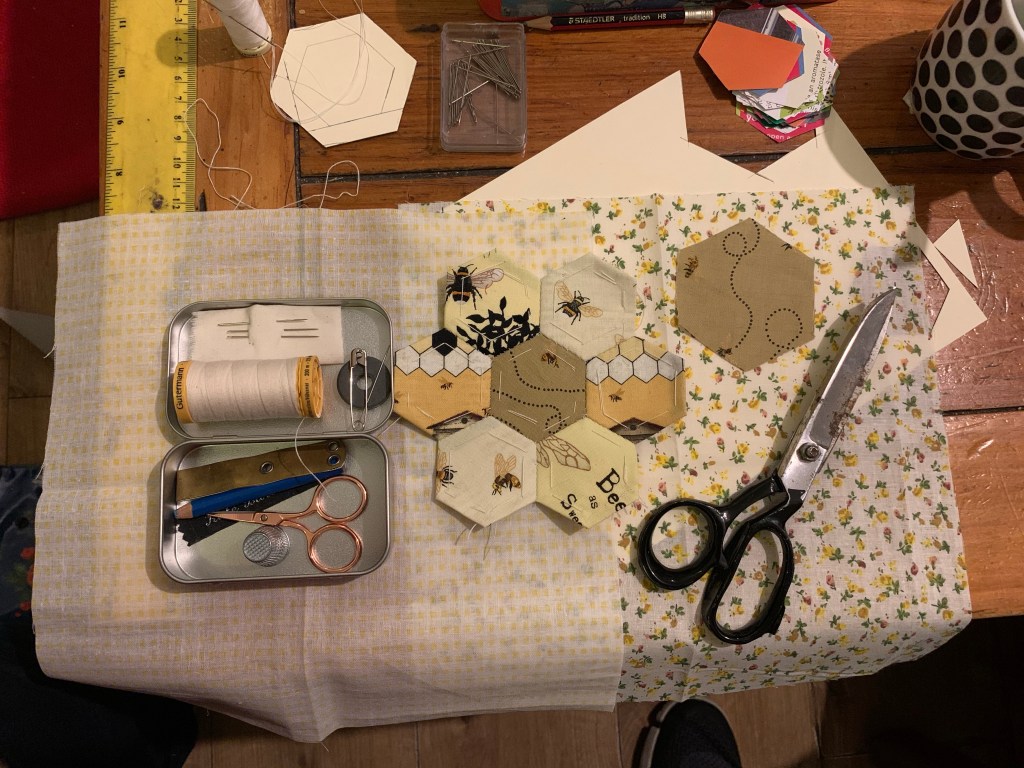
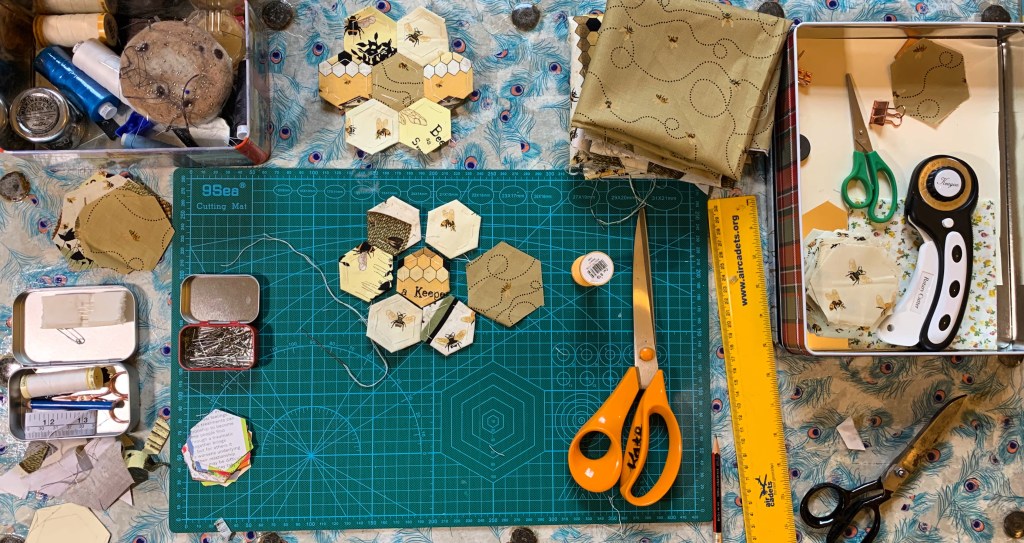
My initial set up just making a sample to see how it works.
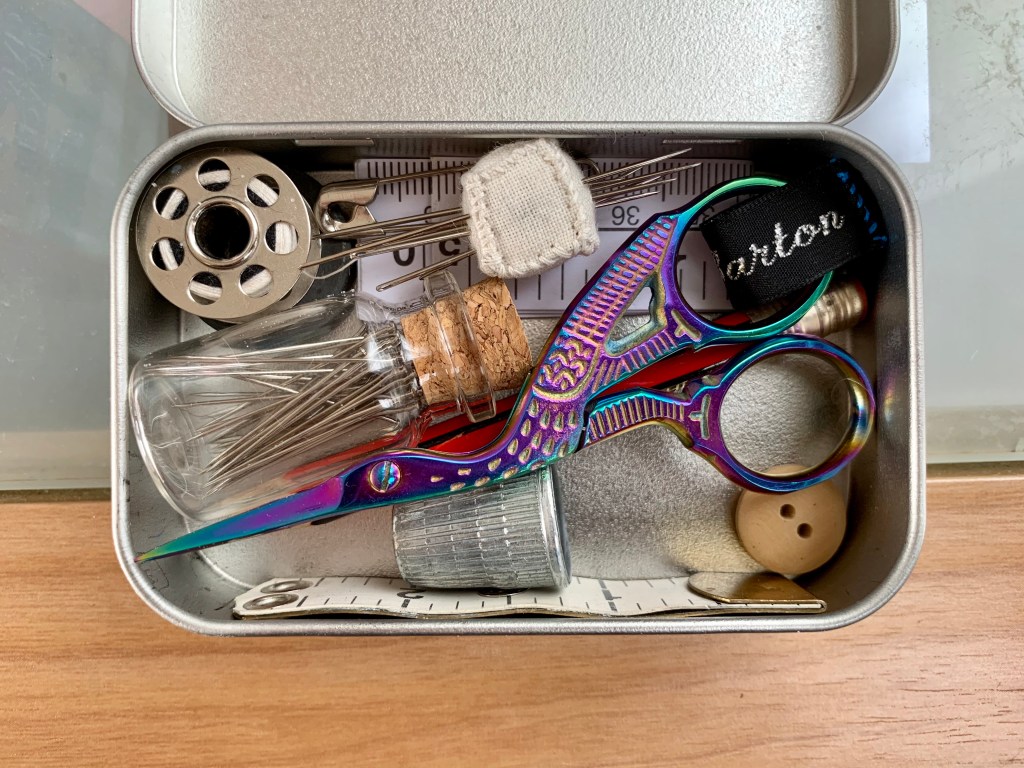
My tiny sewing kit I put together. It’s got everything you need on the go inside a tin the size of an altoid mint tin:
Thread on a bobbin (to save space)
Mini Scissors
Tiny pin cushion with needles
Jar of pins
Tiny Pencil
Paper tape measure and the metal end of a broken tape measure 2 1/2”
Safety pin
Button
Thimble
Making more…
The process of making an EPP quilt is very straight forward and I find quite relaxing. It’s got a few steps so you can almost set up a little production line, so once you have enough you can move onto the next thing, and if you get fed up with that you can go back and repeat the first few steps.
Step One – Chose your design
This step goes hand in hand with picking your fabric. I already knew I wanted to use hexagons just because I really like the look of them, they are classic and are really effective at creating interesting patterns. So it made sense to me to chose some bee print fabric. I bought my fabric on eBay, I just bought a pack of fat quarters, making sure they were 100% cotton.
Step 2 – Cut out lot (Like hundreds!) of Paper Hexagons!
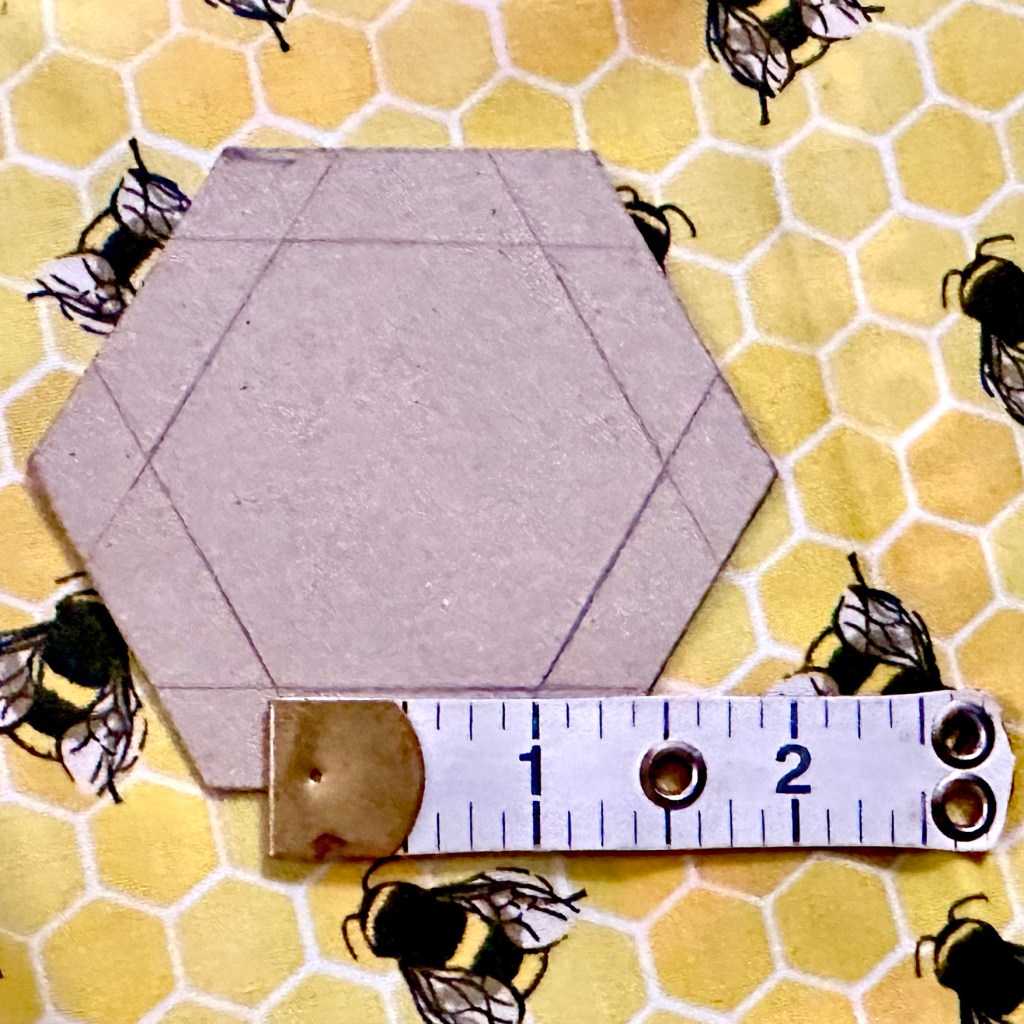
The internal measurement is the finished size of the hexies, so the size of your paper pieces, and the external measurement is the size you need to cut the fabric pieces. I left a 1cm seam allowance.
I’m making 1inch hexagons, so I made a cardboard template to draw around and cut out, but quickly lost the will to live.
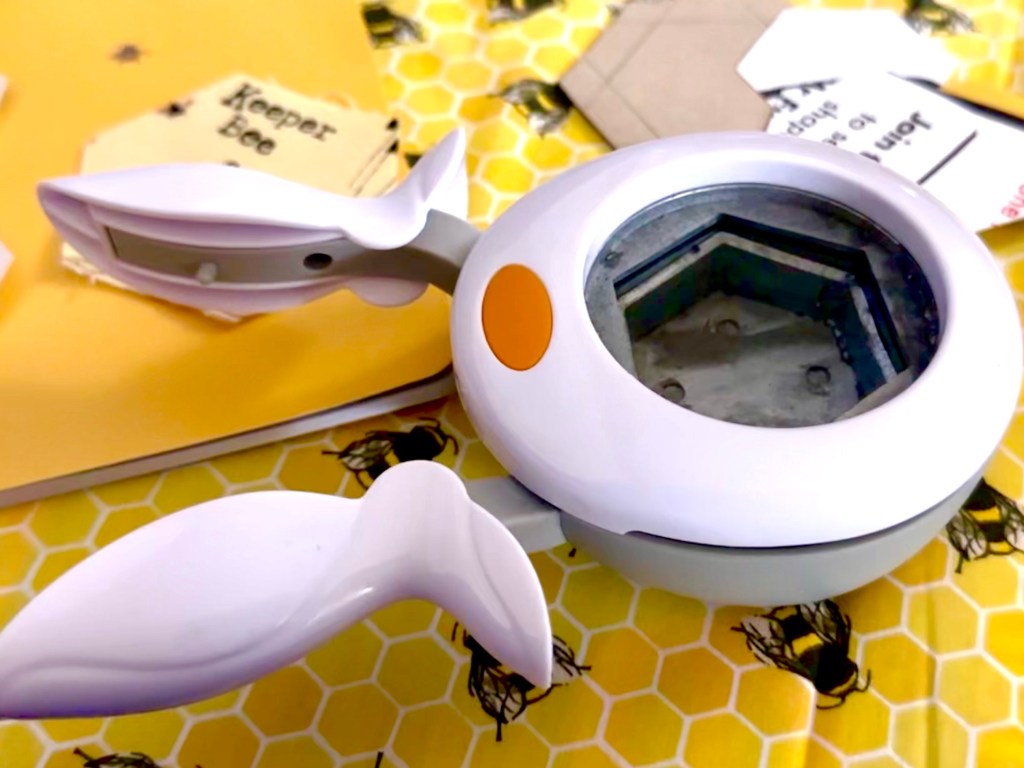
So I bought this… Its a Fiskars 1” hexagon hole punch!!!! It literally saved this project and I 100% recommend getting one to save you cutting individual paper hexies. Here’s a link to them on amazon.
I used the kids old magazines , they were slightly thicker than normal magazine paper and matte so they worked really well and the punch can cut through about 4 layers at once (with a bit of force 😬) which really saves time.
Step 3 – Cutting your fabric hexagons
Yep, as it says on the tin really. You can either try to make the most of your fabric and cut your hexies as efficiently as possible OR you can be more fussy and cut more strategically so you get your hexies looking exactly as you want them. It depends on your design. I’ve done a bit of both but I’ve mostly been trying to be as efficient as possible.
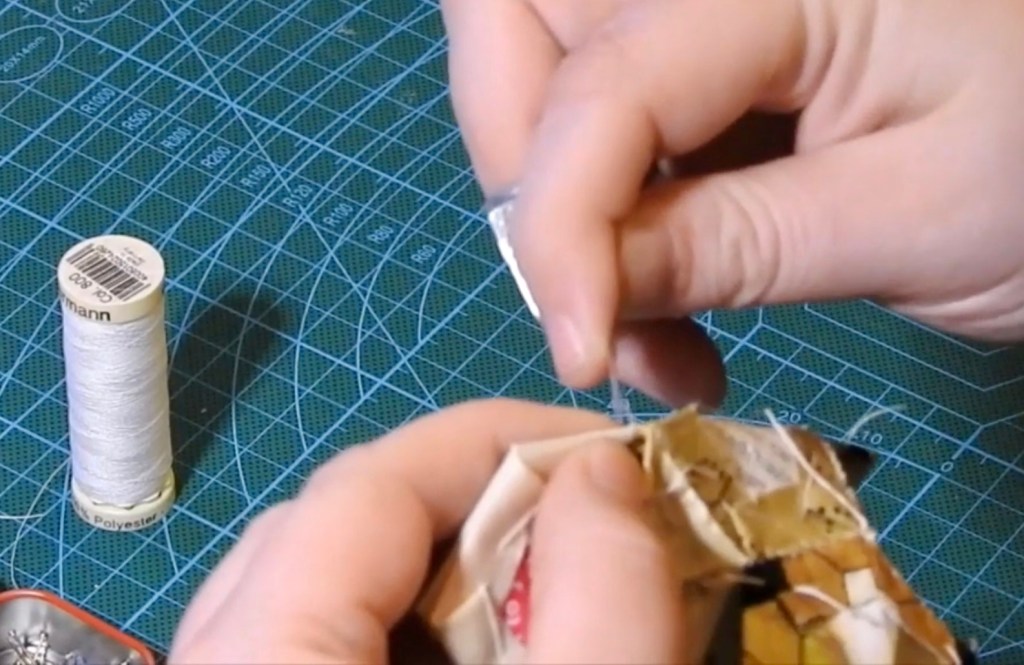
Using the piece of cardboard I draw all my hexies out on my fabric just using a normal HB pencil. You can also just cut squares and trim the excess later, but again, I’m trying to use my fabric efficiently. This image is a still from a video I made at the beginning of my process, linked below.
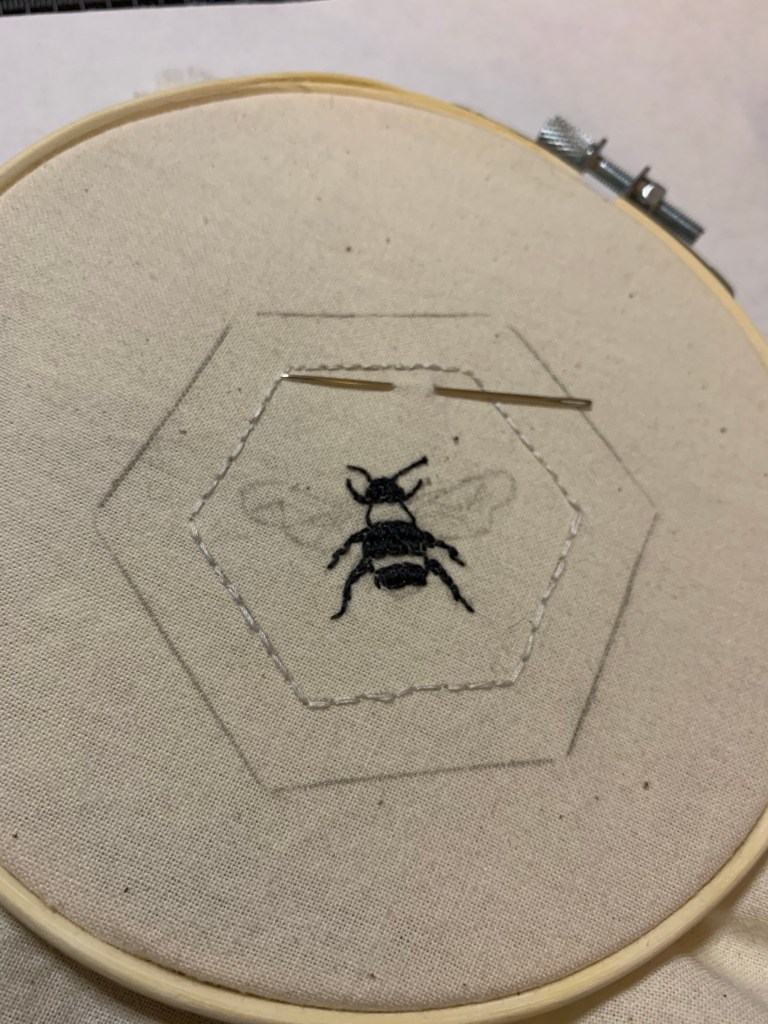
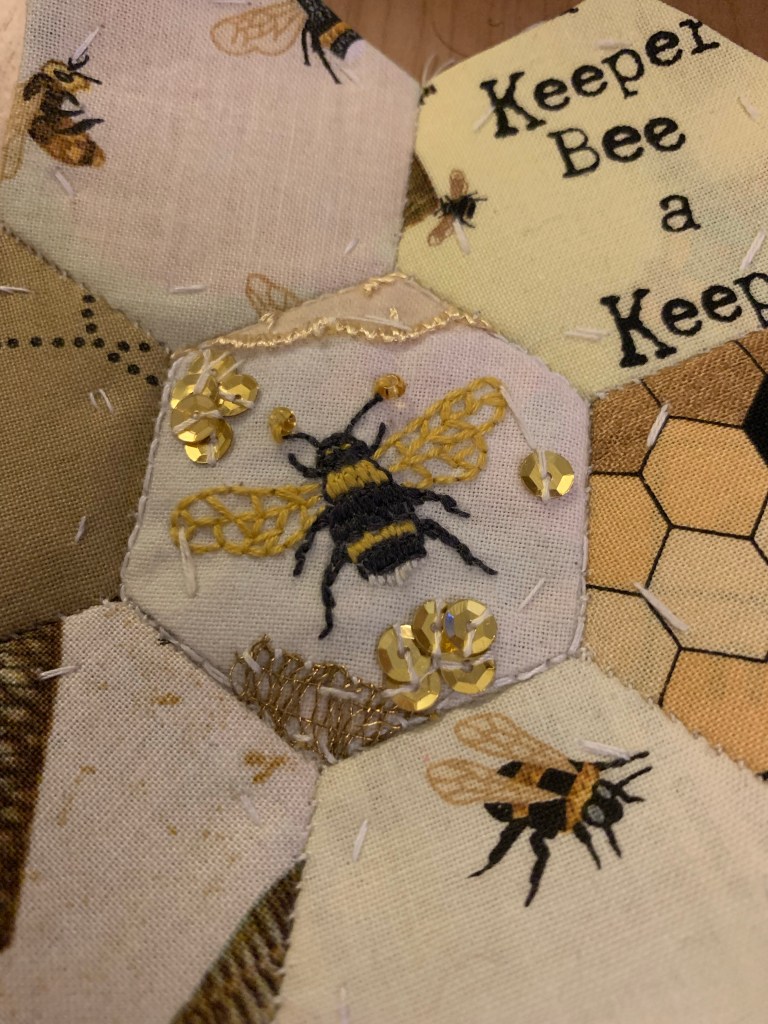
This is just an example of one the more special hexies I’ve included in my quilt, an embroidered bee on calico.
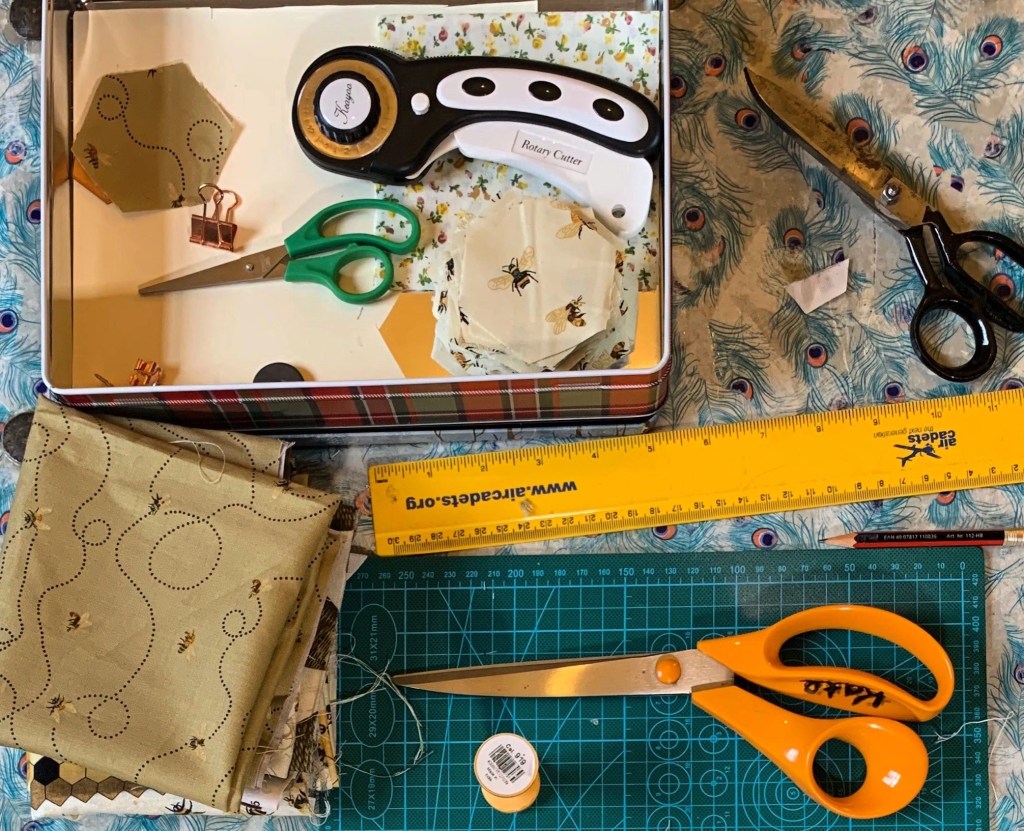
You can cut them anyway you like basically. I started using a rotary cutter and mat but quickly reverted to my scissors. If you’re cutting squares or strips I’m sure using the rotary cutter is easier then. Whatever you find easiest.
Rotary cutter, scissors, mat, fabric bits and bobs.
Step 4 – Tacking/basting/gluing Your paper pieces to your hexies
I have preferred to tack my hexies around the paper pieces. I used clips to hold the folded 1cm of seam allowance around the paper, then tacked them in place using tacking thread. At first I was going all the way through the fabric and paper but realised it would make it difficult to remove the paper, tacking and it was taking longer. So now I do a sort of herrringbone tack around the seam allowance holding them in place without going through the paper.
You should be able to see a few examples of how I tacked the seam allowance in this pic.And here you can see I was still going all the way through the layers. Avoiding this does make it a lot easier.
Many people also use fabric glue to secure the seam allowance to the paper pieces, but I haven’t got much experience with that. I know some people do find it quicker and easier, especially if you struggle with tacking or just want to speed things along!
Step 5 – Sewing your Hexies together
Once you have enough hexies you can sew them together! I made a sample first to try it out and see what I thought about it.
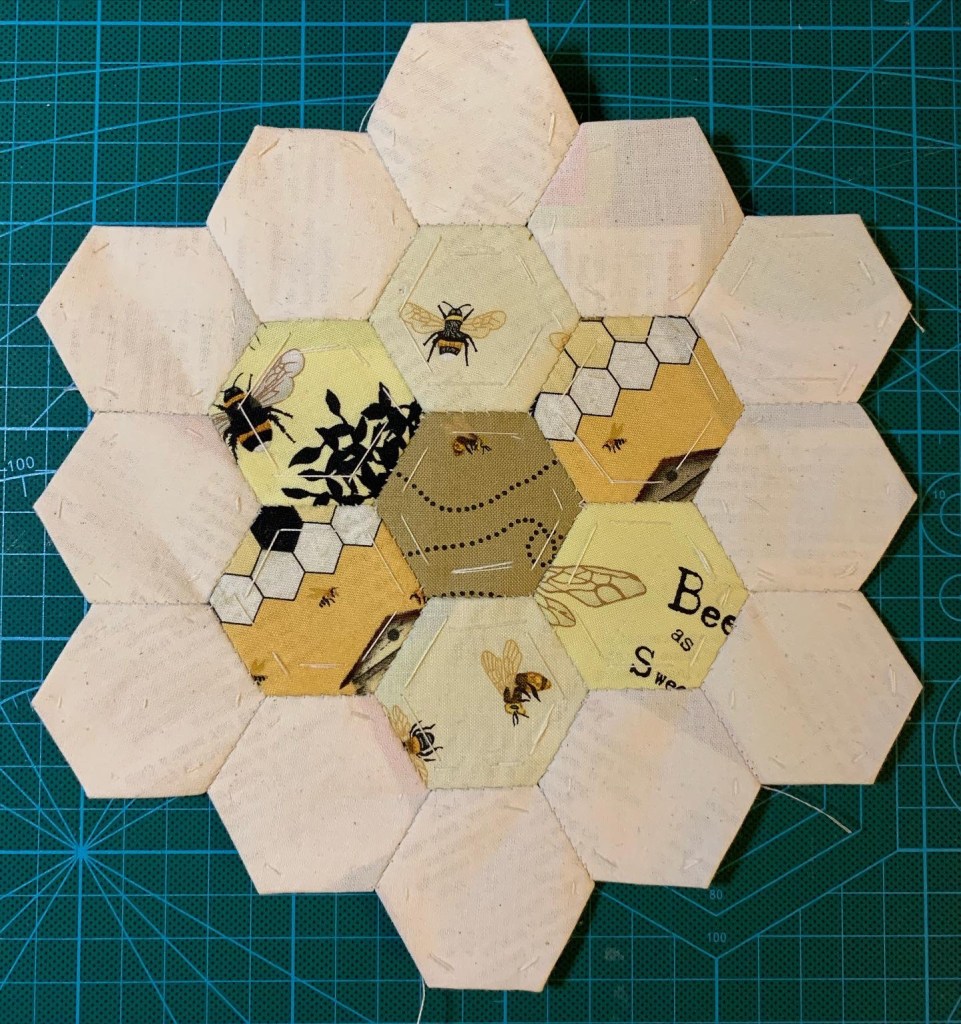
1st Hexi flower completed
In my YouTube video I start to sew together some hexies at about 42 minutes and have an explanation as to what I’m doing there.
Basically you put the right sides of your hexagons together, and do a whip stitch along the edge of the hexagon. You only need to pick up a small amount of fabric from each hexie for it to be secure. Work your way along the edge, until you get to the end, now either tie off your thread or add another hexie and continue until you’ve added 6 hexies around the outside of your central hexie. Then using the same tequnique sew each of the 6 outside hexies to each other, working out from the central hexie.
I tend to use gütermann polyester thread, doubled up for strength and I always use beeswax to help avoid tangles and to further strengthen the thread. Also, I can’t emphasise enough using a thimble! It took me a long time to get into using thimbles, but they are essential. It’s important to find one that fits your finger, it makes sewing so much easier.
Viola!! You’ve got it!! Now I used calico to go around the outside of my hexie flower and have gone from there. But that’s the basics. You can just use any inspiration now and crack on.
And just give in to the fact this is not going to be a quick project. I’ve been picking it up and down whenever i have time to work on it. It was right at the start of lockdown I first started it, when everything was on hiatus. Since then, I finished my degree, started a new job, had another baby!! 😱 Life is chaotic but you can just pick this up whenever you have chance. Make a few hexies, put it back down for a while. Don’t put any pressure on yourself to complete it. It’s a nice relaxing project that will keep you going for years.
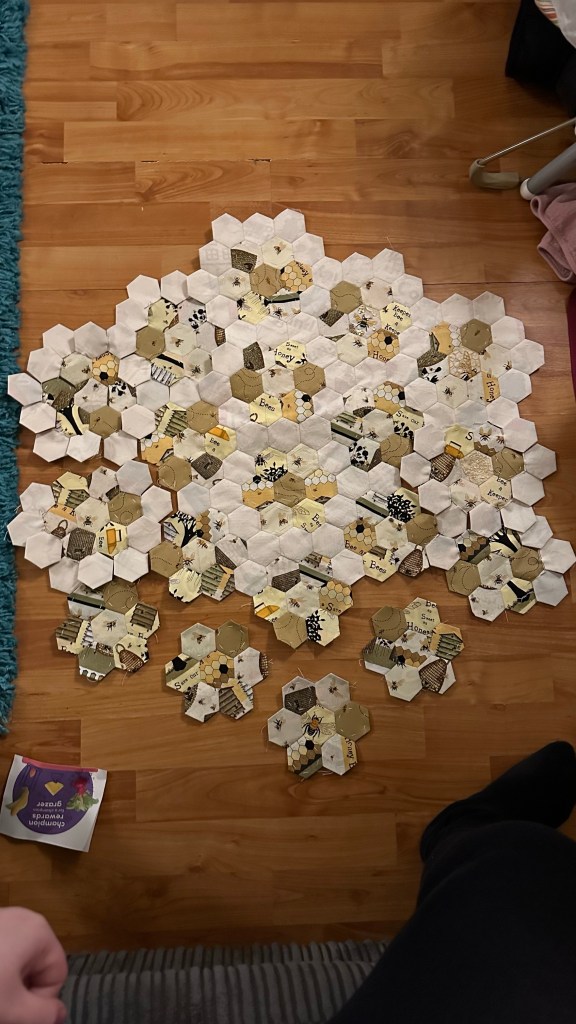
My EPP quilt so far, click thumbnails for a closer look.
A long slow-TV video I made of me just following the process. This was right at the beginning, when I first started making hexies for this project.
I hope you’ve enjoyed a little look into my process of making an EPP quilt so far. I’m sure there are more in depth tutorials and people with far greater experience in quilt making. But using my skills acquired from many years of sewing both as a hobby and professionally I can say I’ve really enjoyed the process so far and I’ll try to keep this blog more up to date
Theres lots of great communities online, on facebook for example to gain inspiration and support, so they’re definitely worth checking out.
As I hinted above, I’ve had a bit of a bonkers few years and had an extreme change in careers which I may go into in another post at some point. But just to share and hope you have a go at EPP too.
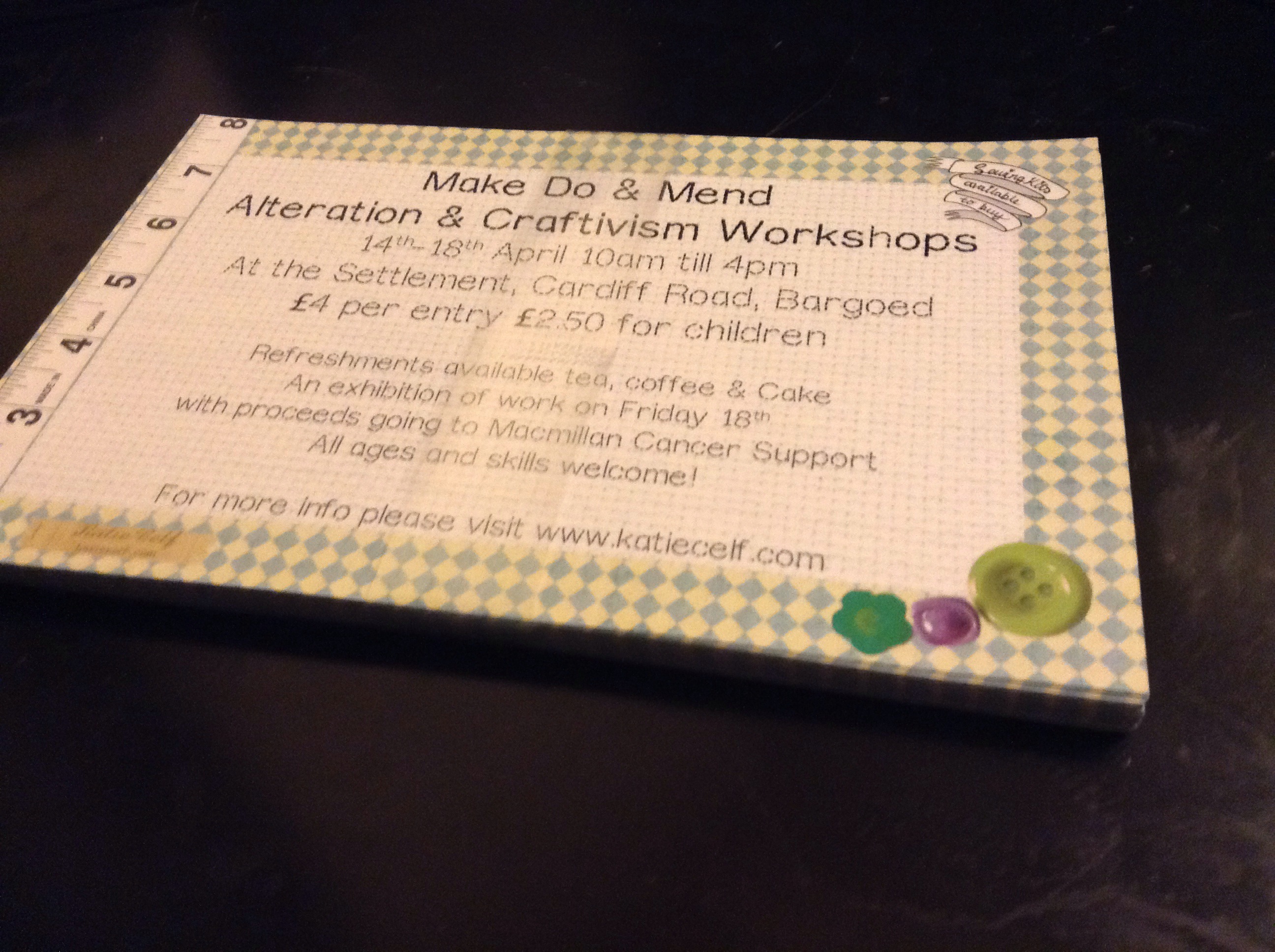
Hooray!! They’re here and looking fantastic (even if I do say so myself). It’s totally official now then, so just got to get them as visible as possible around Bargoed now! Hopefully people will actually come!















 Maker of Things
You must be logged in to post a comment.